
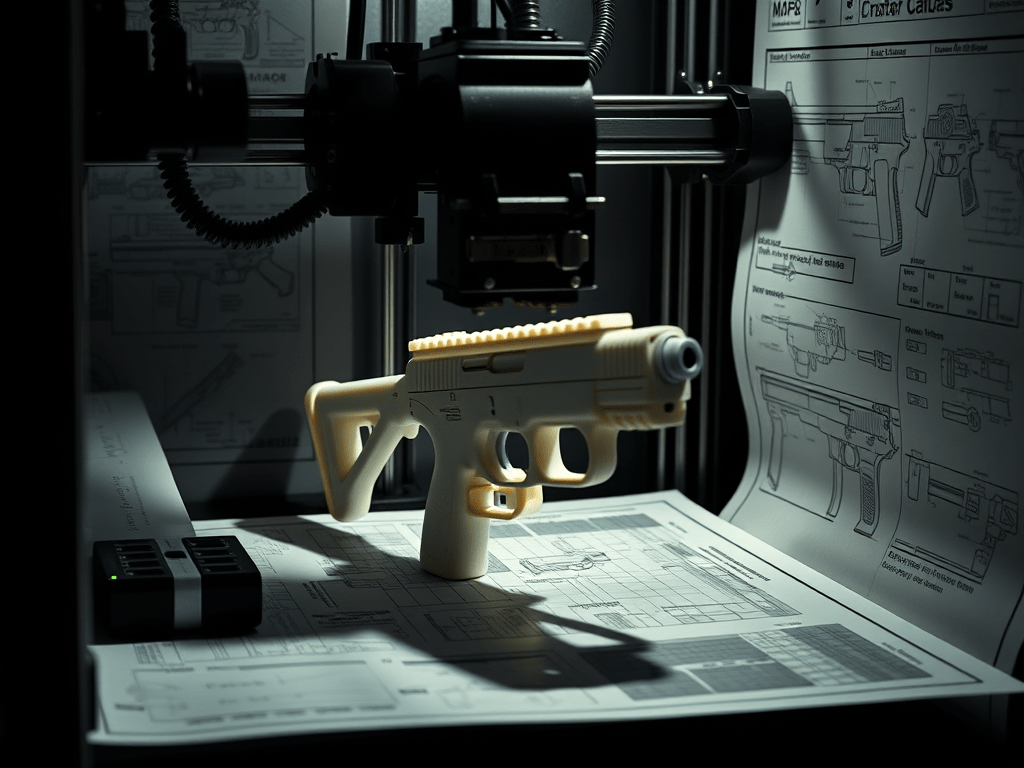
In recent years, the rapid advancement of three-dimensional (3D) printing technology has revolutionized various industries, from manufacturing and healthcare to architecture and education. However, alongside its beneficial applications, 3D printing has also raised concerns about its potential misuse, particularly in the realm of firearms. The ability to design and produce fully functional firearms at home using a 3D printer has led to numerous debates about legality, safety, and regulation. In Canada, where firearm laws are stringent, the question of whether 3D printed guns or privately made/manufactured firearms (PMFs) are legal is a complex and multifaceted issue. This blog post explores the constantly evolving legal landscape surrounding 3D printed firearms in Canada, examining the relevant laws, potential consequences, and what individuals need to know to stay within the boundaries of the law.
- What is a 3D Printed Gun?
- Firearm Laws in Canada
- Are 3D Printed Guns Legal in Canada?
- Possessing a 3D Printed Gun
- Manufacturing 3D Printed Guns
- Selling or Distributing 3D Printed Guns
- The Role of the Internet in 3D Printed Guns
- Penalties for Violating Firearm Laws in Canada
- Conclusion: Understanding the Legal Implications of 3D Printed Guns in Canada
- Resources
What is a 3D Printed Gun?
A 3D printed gun is a firearm or firearm component that is created through the use of 3D printing technology. The process involves using a 3D printer to build objects layer by layer based on a digital design. These guns can range from plastic, fully functional weapons to metal components, with varying degrees of complexity. Some 3D printed guns are made almost entirely of plastic, which makes them difficult to detect by traditional metal detectors, while others incorporate metal parts for increased durability and performance.
In its most basic form, a 3D printed gun can be assembled using downloadable blueprints available on the internet, allowing anyone with access to a 3D printer to potentially create a firearm at home. This has raised significant concerns over gun control, security, and the possibility of individuals circumventing traditional gun licensing and purchasing processes.
3D printed guns are often referred to as “ghost guns.” These guns are unmarked and untraceable, often illegally manufactured or assembled from parts. They either do not have serial numbers or other markings, or their serial number or other markings have been obliterated, thereby preventing them from being traced in a conventional manner.
Firearm Laws in Canada
Canada has some of the strictest gun laws in the world. The possession, use, and distribution of firearms are governed by a detailed set of regulations under the Criminal Code of Canada, the Firearms Act, and the Explosives Act, among others. These laws classify firearms into three categories: non-restricted, restricted, and prohibited. Each category comes with different levels of regulation, including licensing, registration, and background checks. In general, Canadian law is designed to ensure that only qualified individuals can legally own and use firearms.
- Non-restricted firearms are typically hunting rifles and shotguns. These firearms do not require special licensing, though a basic firearm safety course is required for those who wish to own them.
- Restricted firearms include handguns and certain semi-automatic rifles. These firearms require additional licensing, and owners must adhere to strict storage and transportation regulations.
- Prohibited firearms are the most heavily restricted. This category includes automatic weapons, sawed-off shotguns, and certain firearms that are deemed too dangerous or unsuitable for civilian ownership. Of note, this category includes any “unlawfully manufactured firearm” (e.g. ghost guns).
In addition to these categories, Canadian law includes various regulations surrounding the illegal possession, trafficking, and use of firearms, with severe penalties for those who break the law. But how do these regulations apply to 3D printed guns?
Are 3D Printed Guns Legal in Canada?
The short answer is no — creating, possessing, or using a 3D printed gun in Canada is illegal, as it would violate several provisions of the Criminal Code and the Firearms Act. Former Bill C-21 received Royal Assent on December 15, 2023. It includes measures to combat gun crime, including codifying the national handgun freeze into law, increasing penalties for firearms smuggling and trafficking, and adding new offences around ghost guns. The creation or possession of a firearm, whether it is 3D printed or otherwise, is heavily regulated, and individuals who do not have the appropriate licenses or permits can face serious legal consequences.
Possessing a 3D Printed Gun
Under Canadian law, it is illegal to possess a firearm without the proper licensing. This includes 3D printed guns. If a person is found in possession of a firearm that has been 3D printed, it would be classified the same as a traditional firearm, regardless of its method of manufacture.
Even if the firearm is made from plastic or other non-traditional materials, it would still be classified as a prohibited firearm. This means that anyone caught with an unregistered or improperly registered 3D printed firearm could face charges for illegal possession, and they would be subject to the same penalties as those caught with illegal firearms made through traditional manufacturing processes.
The Canadian government has made it clear that firearms made using 3D printing technologies are subject to the same legal requirements and restrictions as any other firearm. In 2018, the Royal Canadian Mounted Police (RCMP) stated that a 3D printed gun was considered a firearm under the Firearms Act and could be treated as such for legal purposes. This includes firearms that are not capable of being detected by conventional means, such as metal detectors.
Manufacturing 3D Printed Guns
Another important consideration is the manufacturing of 3D printed firearms. In Canada, it is illegal to manufacture a firearm without the proper authorization under the Firearms Act, which includes obtaining a firearms license from the Royal Canadian Mounted Police (RCMP). The manufacturing of firearms is strictly regulated, and only licensed individuals or companies are authorized to produce firearms.
For individuals who attempt to create a 3D printed gun at home, they could be charged under the Criminal Code for the unauthorized manufacture of a firearm. This offence carries serious penalties, including fines and imprisonment. Even if the firearm is never used, the mere act of manufacturing it without a license is considered a criminal offence. In fact, it is also illegal to possess or distribute computer data for use in a 3D printer or other system for the purpose of manufacturing or trafficking a firearm or prohibited device.
The RCMP has also warned that the use of 3D printing technologies to create firearms could lead to the development of “ghost guns” — firearms without serial numbers or registration records. This makes it more difficult for law enforcement to trace the weapon if it is involved in a crime. For this reason, the RCMP has stressed the importance of ensuring that all firearms, including 3D printed guns, are registered and properly documented.
Selling or Distributing 3D Printed Guns
In Canada, it is illegal to sell or distribute firearms without a proper firearms business license. This includes the sale or distribution of 3D printed firearms or parts. Whether an individual is manufacturing the firearms for personal use or distributing them to others, selling or distributing 3D printed guns would be considered an offence under Canadian law.
The act of selling or trafficking firearms is heavily regulated, and individuals who are found guilty of these crimes can face significant legal consequences, including imprisonment. The government has made it clear that 3D printed firearms are no exception to these rules, and selling or distributing them without proper authorization could lead to serious legal repercussions.
The Role of the Internet in 3D Printed Guns
One of the most significant concerns about 3D printed firearms is the role that the internet plays in facilitating the distribution of gun blueprints. Websites like DefCAD have hosted files for 3D printed guns, making it possible for individuals to download the designs and print the guns at home. DEFCAD claims to be the leading destination to find and showcase 3D printed gun blueprints in an open source fashion. While these websites are often based in jurisdictions outside Canada, the ease with which these blueprints can be accessed has raised concerns about gun control.
In response to these concerns, the Canadian government has taken steps to address the distribution of 3D printed gun blueprints. In 2018, Canada implemented a ban on the publication and distribution of certain 3D printed gun designs. Under this law, individuals who distribute or share gun blueprints for illegal firearms can face criminal charges, even if they are not physically manufacturing the guns themselves.
Penalties for Violating Firearm Laws in Canada
Canada takes firearm offences seriously, and the penalties for violating firearm laws can be severe. Those caught with a 3D printed firearm, manufacturing one without the proper license, or distributing 3D printed gun blueprints can face criminal charges under the Criminal Code and the Firearms Act. The penalties for these offences can include:
- Fines: Individuals found guilty of possessing or manufacturing 3D printed firearms without proper authorization could face substantial fines, which can vary depending on the severity of the offence.
- Imprisonment: In many cases, violations of firearms laws carry the possibility of jail time. Depending on the offence, individuals could face sentences ranging from a few months to several years in prison.
- Criminal Record: A conviction related to firearms offences could result in a permanent criminal record, which can have long-lasting consequences for employment, travel, and other aspects of life.
Conclusion: Understanding the Legal Implications of 3D Printed Guns in Canada
In summary, the creation, possession, manufacturing, or distribution of 3D printed firearms is illegal in Canada. These firearms are subject to the same legal restrictions and penalties as traditional firearms, and individuals who engage in such activities without the proper authorization could face significant legal consequences. While 3D printing technology offers immense potential for innovation, it is important to remember that firearms are heavily regulated in Canada, and any attempts to bypass these regulations can result in serious charges.
For those interested in 3D printing or firearms, it is essential to understand the legal landscape and ensure compliance with Canadian laws. Engaging in the illegal manufacture or possession of firearms, including 3D printed guns, is a criminal offence and carries the potential for severe penalties. Always stay informed, respect the law, and be mindful of the serious consequences that come with violating Canada’s strict firearm regulations.
Resources
- Law Enforcement:
- Legal: Filkow Law – 3D Printing Guns in Canada: Is it Legal?
- In the News:
- Global News – What are ‘ghost guns’ and what is Canada doing about 3D-printed guns?
- The New York Times – He’s Known as ‘Ivan the Troll.’ His 3D-Printed Guns Have Gone Viral – This article demonstrates the ease of obtaining, and the increased use of, 3D guns.





Leave a reply to How Smart Guns Could Tackle Gun Violence in Canada – Coplogue Cancel reply