
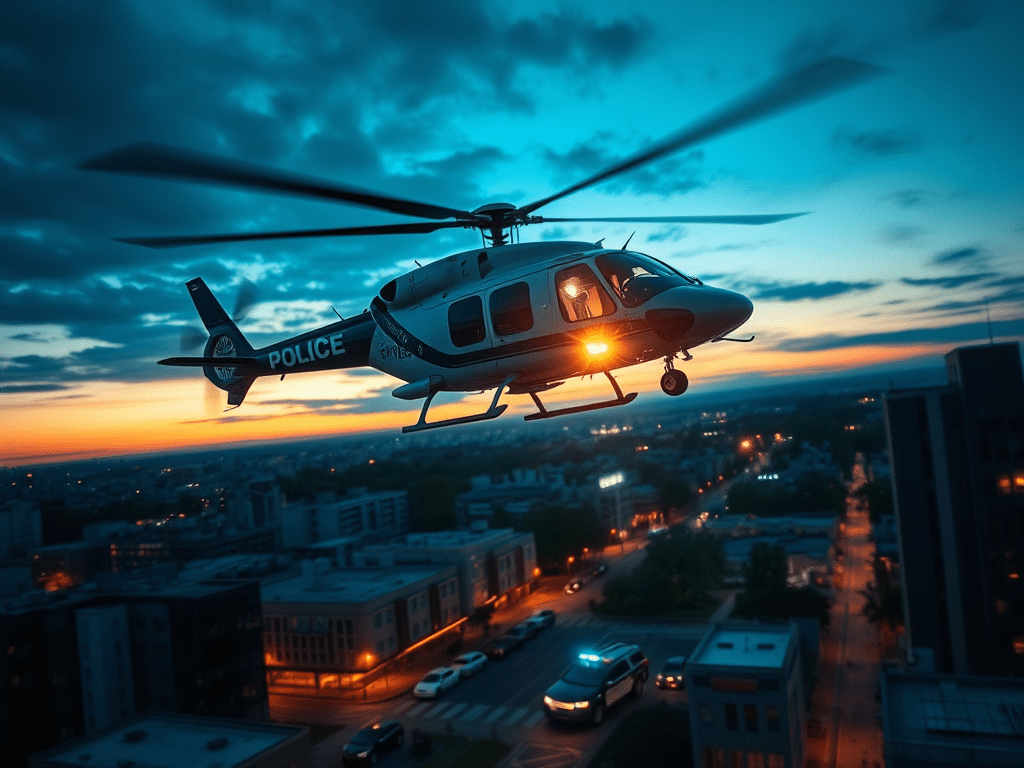
When we think of law enforcement, the first image that often comes to mind is of officers patrolling the streets in squad cars, responding to emergencies on the ground. However, in many modern police forces, helicopters play a vital role in providing an additional layer of support to enhance the effectiveness of law enforcement efforts. From chasing suspects to conducting surveillance, police helicopters have become indispensable tools in maintaining public safety.
In this blog, we’ll explore the various reasons why police departments have helicopters and the critical functions they serve. We’ll dive into the history of police aviation, how helicopters have evolved to meet law enforcement needs, and the advantages they offer in a variety of situations. Whether it’s for pursuit, search and rescue, or tactical operations, helicopters help officers achieve what would otherwise be impossible from the ground. Let’s examine why police forces around the world have come to rely on these flying machines.
Click Here for Our Compilation of Must-Watch Canadian Police Helicopter Videos!
- A Brief History of Police Helicopters
- Key Reasons Why Police Have Helicopters
- Surveillance and Monitoring
- Pursuit and Apprehension of Suspects
- Search and Rescue Operations
- Tactical Support and SWAT Operations
- Traffic Management and Monitoring
- Crime Prevention and Deterrence
- Disaster Response and Emergency Support
- Support for Community Policing
- Cost-Effectiveness and Efficiency
- The Technology Behind Police Helicopters
- Limitations of Police Helicopters
- Conclusion
A Brief History of Police Helicopters
Before we dive into their current uses, it’s worth taking a moment to understand how helicopters became part of the law enforcement landscape. The introduction of helicopters in law enforcement began in the mid-20th century, with the first known use of a police helicopter occurring in Los Angeles in 1956. The Los Angeles Police Department (LAPD) was the first to implement this concept, using a helicopter to conduct aerial patrols. Their success was evident, and the idea quickly spread to other police departments across the United States and the world.
Initially, police helicopters were primarily used for surveillance and searching large areas, but over the years, their role has expanded. Advances in technology have made helicopters faster, more reliable, and equipped with tools that provide real-time data. Today, police helicopters are critical in helping officers manage and respond to emergencies, especially in large urban areas or vast rural regions.
Key Reasons Why Police Have Helicopters
Let’s delve into the primary reasons why helicopters are such valuable assets for police departments.
Surveillance and Monitoring
One of the most important roles of police helicopters is conducting aerial surveillance. Helicopters can cover vast areas quickly, providing a bird’s-eye view of a situation that would otherwise be difficult or impossible to monitor from the ground. This ability to see from above allows officers to track suspects, monitor large crowds, and identify potential threats before they escalate.
For instance, during protests or large public events, helicopters can monitor the crowd’s movement and alert officers on the ground about any suspicious behavior or potential threats. The high vantage point provides police with an unmatched perspective, helping to prevent conflicts or guide response units to the right location quickly.
Pursuit and Apprehension of Suspects
Perhaps the most iconic use of police helicopters is in high-speed chases. When a suspect flees on foot or in a vehicle, police helicopters can quickly track their movements from the air, providing real-time updates to ground officers. Helicopters can follow a suspect even in heavy traffic, rough terrain, or densely populated areas, giving ground units the information they need to make arrests with greater efficiency and safety.
In many cases, when a suspect evades capture on the ground, helicopters can maintain visual contact, guiding officers to the suspect’s location, and coordinating a safe and controlled arrest. This can help minimize the risk of danger to officers, civilians, and the suspect themselves.
Search and Rescue Operations
Helicopters play an indispensable role in search and rescue (SAR) missions, particularly when individuals go missing in remote, difficult-to-access areas. Police helicopters are often deployed to assist in locating missing persons in forests, mountains, or bodies of water, providing a wide coverage area that would be challenging to achieve with ground search teams alone.
Helicopters are equipped with advanced tools, such as thermal imaging cameras, to help detect heat signatures at night or in low visibility conditions. This makes them invaluable during searches for lost hikers, stranded individuals, or people involved in accidents in hard-to-reach places. When seconds count, helicopters can save lives by reducing the time it takes to locate and rescue individuals.
*** Pro Tip: Read our blog titled “How “What3words” Improves Emergency Response” to learn how you can accurately convey your location to emergency services. ***
Tactical Support and SWAT Operations
Police helicopters are also integral to SWAT (Special Weapons and Tactics) teams and tactical law enforcement operations. These helicopters provide aerial surveillance and strategic intelligence during high-risk situations, such as hostage rescues or armed standoffs. By providing live feeds of the situation on the ground, helicopters enable SWAT teams to plan their movements and actions more effectively.
Additionally, helicopters can be used for inserting and extracting personnel in tactical operations. For example, in hostage situations, officers may use helicopters to quickly deploy SWAT members to the scene or extract key personnel, such as negotiators or medical responders, without the risks of road-based entry or exit.
Traffic Management and Monitoring
In busy urban environments, managing traffic flow is a challenging but essential task for law enforcement. Police helicopters can be used to monitor traffic conditions, identify accidents or congestion, and relay information to ground units. By providing an aerial view, helicopters can help direct emergency vehicles to the fastest routes, reduce delays, and manage crowds in the aftermath of accidents or public events.
For example, during major traffic incidents or accidents, a helicopter can assess the situation from above and guide ground units, reducing the need for officers to waste time assessing the scene themselves. This capability is invaluable for improving response times and overall traffic safety.
Crime Prevention and Deterrence
The presence of a police helicopter can act as a powerful deterrent to criminal activity. When criminals know that law enforcement has the ability to track them from the air, they may be less inclined to engage in illegal activities, such as drug trafficking, burglary, or vehicle theft.
Helicopters can conduct regular aerial patrols in high-crime areas, providing a visible reminder that law enforcement is actively monitoring the area. This preventive measure can discourage criminal behavior and reduce overall crime rates. The mere sight of a helicopter hovering above can create an atmosphere of vigilance that promotes safety and peace of mind in communities.
Disaster Response and Emergency Support
In the event of natural disasters, such as floods, hurricanes, or wildfires, police helicopters are crucial in assisting with disaster response efforts. These helicopters can provide critical aerial reconnaissance, assess the damage, and help direct rescue efforts to the most affected areas.
For example, during a flood, a helicopter can fly over the affected areas, identify locations where people are stranded, and direct rescue teams to those locations. Helicopters can also transport first responders, medical personnel, and supplies to hard-hit areas when roads are impassable. In these situations, the speed and versatility of helicopters can make all the difference in saving lives and alleviating suffering.
Support for Community Policing
Another key benefit of police helicopters is their role in supporting community policing efforts. By being visible in the skies, helicopters can increase public trust in law enforcement. They provide a sense of security, knowing that officers are actively monitoring and ensuring safety. Additionally, police helicopters can be deployed to respond to community needs, such as providing aerial support during neighborhood patrols or assisting with crime reduction programs.
In many cases, police helicopters can work in partnership with local organizations and community leaders to build stronger relationships between law enforcement and the public. This helps foster a sense of cooperation and unity, which can be crucial for long-term success in crime prevention and public safety.
Cost-Effectiveness and Efficiency
While police helicopters come with a significant financial investment, they can be a cost-effective tool when considering the overall value they bring to law enforcement efforts. For example, the ability to track suspects over long distances or monitor large-scale events from the air means fewer officers are needed on the ground. This can save police departments money in terms of personnel and resources.
Moreover, helicopters are often used in a multi-purpose capacity, meaning they can serve various functions without the need for multiple specialized units. This efficiency allows police departments to maximize their investment in aerial support.
The Technology Behind Police Helicopters
Modern police helicopters are equipped with cutting-edge technology that enhances their capabilities. These technologies include:
- Night Vision and Thermal Imaging: These tools allow police helicopters to operate effectively in low light or nighttime conditions. Thermal imaging can detect heat signatures from suspects, vehicles, or people, even when they are hidden or trying to flee.
- High-Resolution Cameras: These cameras provide real-time visual feeds to officers on the ground, allowing them to monitor situations and gather evidence during investigations.
- Communication Systems: Helicopters are equipped with advanced communication systems that allow them to stay in constant contact with ground units, other aircraft, and command centers. This ensures seamless coordination during operations.
- Global Positioning System (GPS) and Tracking Systems: GPS technology allows for accurate navigation and the ability to track suspects or vehicles in real-time.
Limitations of Police Helicopters
Although there are many advantages to police helicopters, here are their limitations:
- If the suspect(s) enter into a large structure (e.g. a building) while being tracked from the air, it would be difficult to know their location unless ground units locate the suspect(s) inside the structure or the suspect(s) exits the structure within the field of view of the police helicopter.
- The ability to fly and the flight time is constrained by the weather conditions and the fuel remaining, respectively.
Conclusion
Police helicopters are not just a luxury or a novelty; they are a vital component of modern law enforcement. From conducting surveillance and chasing suspects to performing search and rescue missions and disaster response, helicopters provide unparalleled support for police forces around the world. Their versatility, speed, and ability to cover vast areas make them invaluable tools for ensuring public safety and effective law enforcement.
As technology continues to evolve, we can expect helicopters to become even more advanced, enhancing their role in maintaining law and order. Whether it’s by preventing crime, saving lives in emergency situations, or providing critical intelligence during operations, police helicopters remain one of the most effective tools in the modern policing toolkit. Their importance is only set to grow as the challenges facing law enforcement become increasingly complex.





Leave a comment